

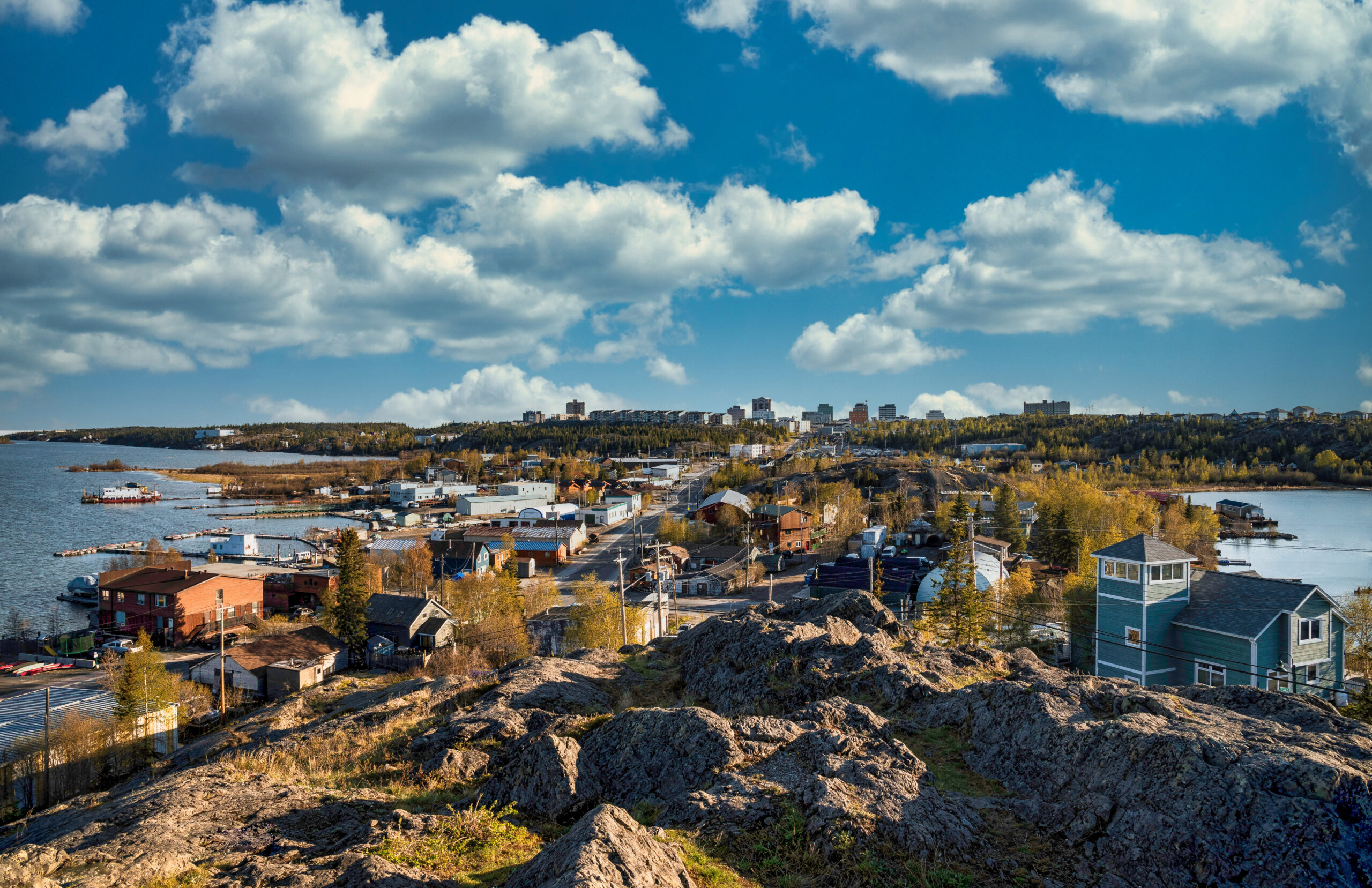
Written from Yellowknife, NWT
I’m in Yellowknife right now for a Northern communities conference. We’re two days in and one thing keeps coming up for me during every conversation I have: The challenges here look separate, but they aren’t.
Energy, waste, food, population… they’re the same problem showing up in different ways. And that means there’s a single solution that addresses all of them at once.
Let me walk you through what I mean.
What Northern Communities Are Actually Dealing With
Most Canadians in the south don’t think about this stuff. I didn’t fully appreciate the scale of it until I started having these conversations.
Energy costs are brutal. Most of these communities run on diesel. Heating a building costs multiples of what it costs in Calgary or Vancouver. That’s not just expensive, it’s an economic ceiling on everything the community can do or become.
Landfill space is running out. A lot of the North sits on the Precambrian Shield. Solid rock. You can’t dig a landfill into bedrock. The ones that exist are full or close to it, and managing them is expensive and environmentally risky, especially near watersheds.
Food comes from very far away. Fresh produce travels thousands of kilometres to reach these communities. By the time it arrives, the cost is high and the quality has taken a hit. Growing food locally has always felt impossible given the climate and the short season.
The population is going to increase. Canada is serious about Arctic sovereignty right now. There’s real political will and real investment coming into the North. But you can’t grow a population in a place that can’t afford to heat its buildings, is running out of places to put its garbage, and can’t feed itself. Those things have to get solved first.
Here’s What I Keep Telling People
The waste problem and the energy problem are the same problem.
A small to mid-sized Northern community generates a significant amount of wood waste, cardboard, organics and municipal solid waste every single year. Right now that material is a liability. It costs money to manage, it takes up space that doesn’t exist, and it creates environmental risk.
But with the right technology, that same material becomes fuel. The liability becomes an asset. And that changes everything.
The Two Technologies I’m Here to Talk About
I’m representing two technologies in Yellowknife this week and honestly I think the combination of them is one of the more complete solutions I’ve seen for remote community resilience.
The first is EcoGrowth’s waste processing system. It shreds, pelletizes, and gasifies wood, cardboard, and organics into thermal fuel. The process also separates out value streams like livestock feed, reusable lumber, and recycled plastic products. What was sitting in a landfill becomes a local energy economy.
The second is our passive solar greenhouse at 5th World. We’ve validated this across four North American climate zones. In Calgary on the coldest day of the year, a conventional greenhouse burns through 99 kilowatt hours of heat. Ours uses eight. Same growing environment. Same plants. 92% less energy. That’s not a small improvement, it’s a completely different approach to growing food in a cold climate.
Now put them together. The thermal output from gasifying community waste heats the greenhouse network. The community grows its own food. Tipping fees disappear. Diesel dependency drops. Carbon credits get generated. And all of it comes from material the community was already paying to get rid of.
That’s a circular system. And it can be deployed today.
Why This Moment Matters
Canada is investing in the North. The money is coming. The political will is there. The question is whether we use this moment to build communities that are actually resilient, or whether we just build the same things we’ve always built and hope for different results.
A community that produces its own energy, handles its own waste, and grows its own food has options. Options to grow, to attract people, to weather disruption. Communities that don’t have those things are vulnerable in ways that are going to become more visible, not less.
Where We Go From Here
The conversations I’m having up here are good ones. People get it. The problems are real and urgent and those dealing with them know them better than anyone.
If you’re working on Northern community development, energy, waste, or food security, I’d genuinely like to connect. This is work worth doing.
More to come as this develops.
Rob Avis is the Co-founder of 5th World. He has spent 18 years designing food, energy, and water systems for properties and communities that want to be genuinely self-sufficient.