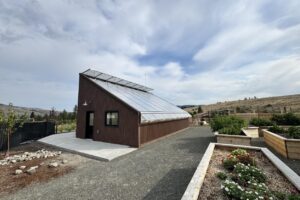



Canadian Prime Minister Mark Carney’s new food affordability measures include a potentially powerful lever: Immediate expensing for greenhouses. By allowing producers to fully write off greenhouses acquired on or after 4 November, 2025 (and in use before 2030), the policy targets one of the biggest drivers of food prices: Infrastructure costs.
This is a smart policy. Greenhouses expand domestic food supply, thereby reducing dependence on imports, as well as stabilize production in a harsh and changing climate. Lowering the capital barrier for food production can be an effective way to reduce grocery costs.
But if this policy is truly about protecting consumers, there’s an important question worth asking:
Who gets to count as a producer—and who actually benefits from lower production costs?
The Hidden Costs of a Centralized Food System
Our current food system is what is referred to as “centralized.” A centralized food system is one in which most food is grown, processed, and distributed by a small number of large producers and companies, often far from where consumers live.
That said, food prices are high in part because food is costly to grow, but also because it’s costly to move, store, insure, and stabilize.
Centralized food systems require:
- Long-distance transportation
- Refrigerated storage
- Just-in-time logistics
- Insurance against spoilage and disruption
- Emergency interventions when supply chains fail
These costs compound. Even highly efficient farms and grocery stores remain exposed to fuel prices, labour shortages, weather volatility, and geopolitical risk.
Greenhouses help—but where those greenhouses are located matters just as much as how many are built.
Lower Production Costs Don’t Automatically Mean Lower Grocery Prices
There’s another structural reality worth acknowledging: Producers don’t set grocery prices—grocers do.
Even when upstream production costs fall, those savings don’t reliably reach consumers. In concentrated grocery markets, cost reductions are often absorbed as margin rather than passed through at the checkout.
That doesn’t make greenhouse expensing bad policy. It makes it incomplete if the sole metric of success is grocery affordability.
If the goal is to protect households, policy should do more than hope savings trickle through centralized supply chains. It should reduce household exposure to those chains altogether.
That’s where food sovereignty and distributed production change the equation.
Distributed Production Improves Security First—and Affordability Follows
When food is produced closer to where it’s consumed, the system becomes more resilient and less expensive to operate—even if per-unit production costs aren’t always lower.
Community- and residential-scale production:
- Cut transportation costs
- Reduce spoilage and waste
- Smooth seasonal supply shocks
- Lower pressure on centralized producers
- Improve local food availability during disruptions
This isn’t about replacing commercial agriculture or grocers. Large producers and sellers still anchor the system. But distributed production complements them by reducing peak demand stress and logistical overhead.
Canada already recognizes this logic in energy policy. Citizens who generate their own electricity through rooftop solar are treated as legitimate contributors to national infrastructure through the country’s net metering programs. Food should be next.
Food Security Without Permanent Subsidies
Distributed food production doesn’t magically make food cheap—but it does make households less dependent on volatile prices.
Households that produce even 10–20% of their own fresh food:
- Reduce their exposure to grocery inflation
- Gain predictable access to essentials
- Improve nutrition and food stability
Those benefits compound year over year and require no ongoing government payouts. Unlike rebates or price controls, infrastructure doesn’t expire. Once a greenhouse exists, it keeps producing value.
From a household perspective, this functions less like a subsidy and more like risk insurance against food shocks—especially important for fixed-income and northern communities.
Job Creation That Can’t Be Offshored
Expanding greenhouse eligibility would also stimulate domestic employment in areas Canada already has strengths:
- Greenhouse manufacturing
- Installation and retrofitting
- Maintenance and operations
- Food systems design and engineering
These are skilled, local jobs that stay local. They strengthen regional economies while reinforcing food sovereignty and security.
The Resilience Dividend

Distributed food infrastructure also reduces public costs during crises.
More local production means:
- Less vulnerability to supply chain disruptions
- Lower emergency food assistance expenditures
- Greater stability during climate events or fuel shocks
This resilience dividend doesn’t show up immediately on a balance sheet—but it matters when systems are stressed.
A Practical Policy Evolution Path
We don’t yet know what exactly is meant by “producer” in Carney’s announcement. Assuming this strictly refers to commercial producers, the greenhouse expensing measure doesn’t need to be reinvented—just expanded thoughtfully.
Phase 1: Define micro-producers
- Minimum production thresholds
- Output tracking (even rough)
- Infrastructure standards (energy efficiency, durability)
Phase 2: Expand eligible producers
- Community greenhouses
- Housing co-ops
- Indigenous communities
- Multi-unit residential buildings
- Schools and institutions
Phase 3: Residential eligibility (homesteads, small farms, etc.)
- Cap the write-off amount
- Tie eligibility to verified food production
This mirrors how rooftop solar policy matured—starting with institutions, then moving downstream as standards and measurement improved.
Sustainable Greenhouses Align With Climate Goals
Not all greenhouses are equal. Complementary policies that favour energy-efficient, passive solar, and low-emissions designs would:
- Reduce operating costs
- Improve long-term viability
- Align food security with climate goals
Supporting sustainable greenhouses isn’t just good climate policy—it’s smart risk management.
In short: Increasing support for greenhouses is good policy. Increasing support for sustainable greenhouses is better policy.
When Infrastructure Beats Subsidies
The core insight behind greenhouse expensing is that capital costs are the real bottleneck in food production.
If we take that logic seriously, then anyone who materially contributes to domestic food supply should qualify—regardless of scale.
Because:
- Food security improves when production is distributed
- The most resilient food is the food produced close to home
- Infrastructure outperforms short-term subsidies
Mark Carney’s greenhouse policy is a strong start. With thoughtful expansion, it could become one of the most effective food levers Canada has ever deployed—by meaningfully empowering food sovereignty and security.