

When Ellen MacCormac set out to develop a long-held family property in St. Margaret’s, Prince Edward Island, she wasn’t simply planning a homestead. Her vision was far more ambitious: A regenerative property built on permaculture principles, designed to produce food, restore biodiversity, and eventually operate as a low-impact, off-grid system.
But translating that vision into a workable plan required strategy and expertise. Specifically, a deep understanding of the land’s features—and how these translate into challenges or opportunities for regeneration.
From Theory to Reality
Ellen’s relationship with regenerative design began years earlier with a permaculture course taught by Rob Avis (Chief Engineering Officer, 5th World). The training sparked a deep interest in food forests, ecosystem thinking, and sustainable land stewardship.
But there was a missing piece.
At the time, she didn’t own land, which meant the concepts remained theoretical. The knowledge was inspiring, but without a place to apply it, momentum stalled.
Everything changed in late 2024 when a parcel of land in St. Margaret’s, previously owned by her ancestors and, later, her uncle, became available. The property felt ideal: Rural, wooded, and largely untouched for decades. Land she could shape intentionally from day one.
Yet that same blank canvas quality quickly revealed a challenge: With so many possibilities, it became difficult to know where to start. Even basic questions—such as where to place a driveway—carried long-term implications.
Recognizing the stakes, she turned to 5th World for guidance:
“I enjoyed the permaculture course so much—sometimes you just connect with information so deeply; I was bursting at the seams to get to do this,” said Ellen.” I want this done right, and 5th World is who I learned the principles from.”
She continued:
“It’s been phenomenal working with Kevin Dubienski (Senior Regenerative Property Design Consultant, 5th World). The conversations go really in depth, and I felt like we were on the same page right from the start. Kevin’s just a wealth of knowledge, so I was very pleased to get to work with him.”
Starting with the Land Itself
5th World’s process begins with a foundational principle: Every design must start with a deep understanding of the landscape. Before recommending landscaping or infrastructure, the team conducts a comprehensive land analysis examining the systems that shape the property.
For the St. Margaret’s site, that analysis included climate patterns, watershed dynamics, topography, and biodiversity mapping.
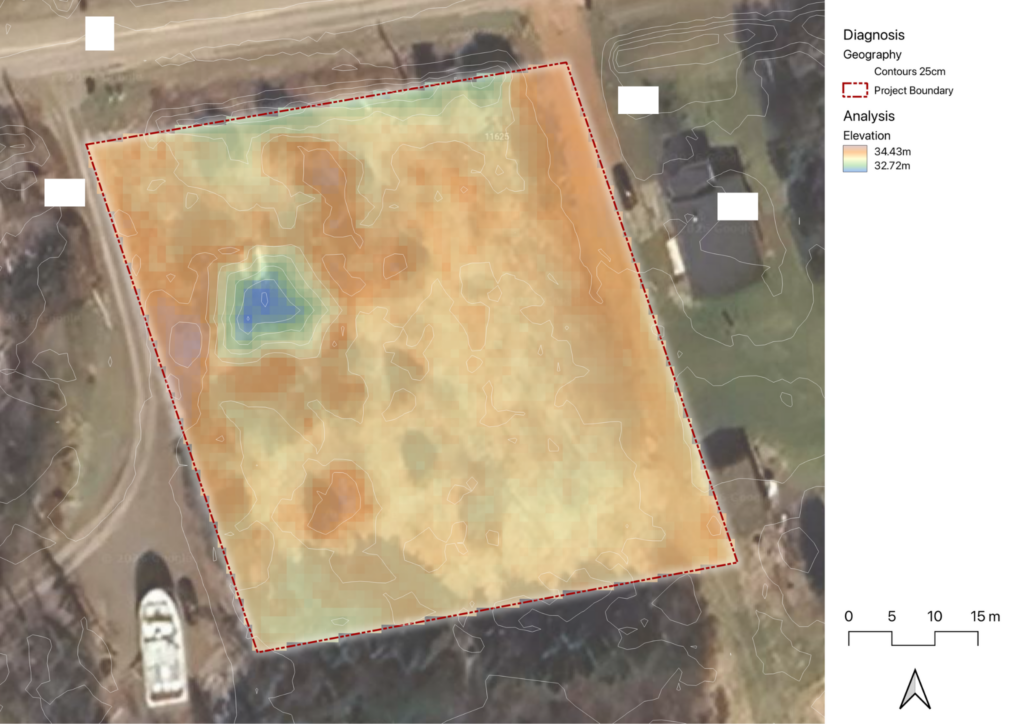
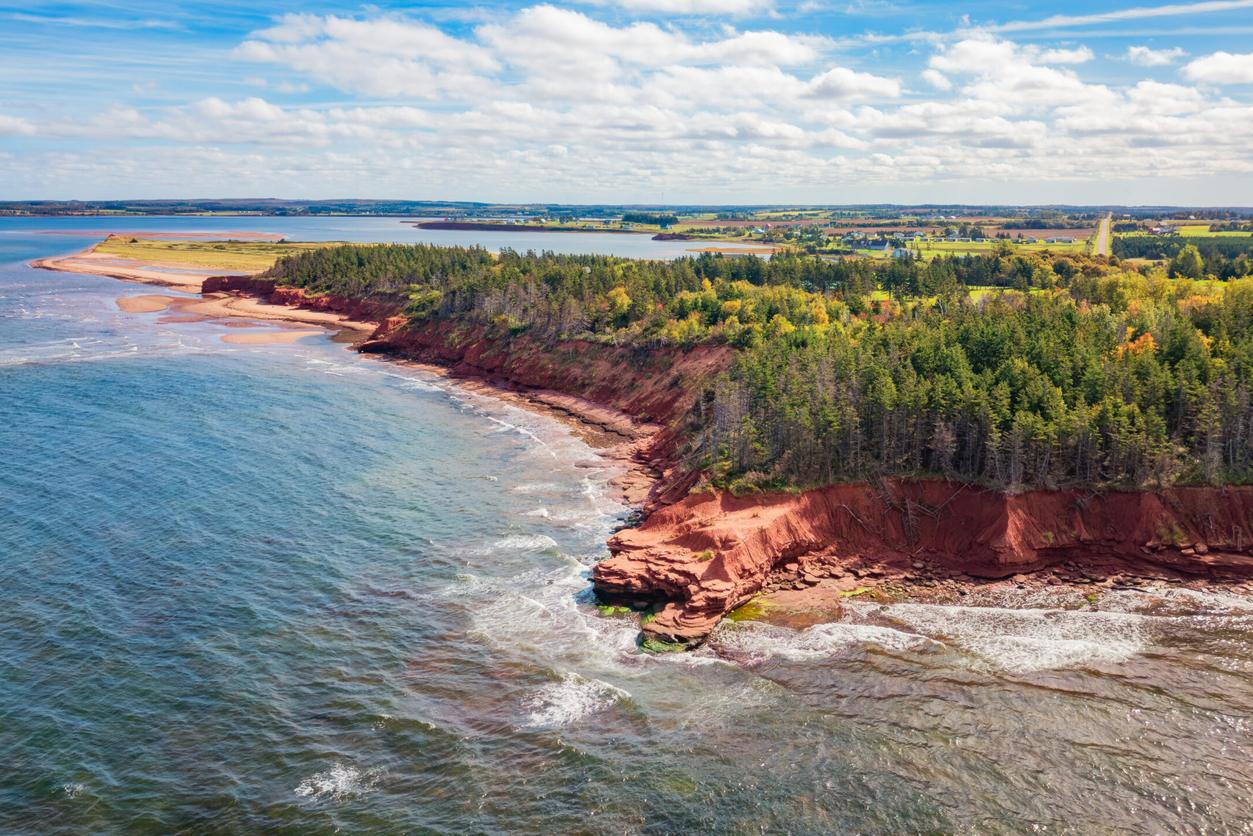
The property sits in Eastern Kings County, a region influenced by the nearby Gulf of St. Lawrence. The maritime climate moderates temperatures while introducing strong winds that shape vegetation and soil patterns. Understanding those factors was critical to designing resilient systems.
Water movement was one of the first key insights. 5th World’s analysis revealed that the property sits at an elevation where flooding risk is minimal and that relatively little upstream watershed flows through the site. This information immediately helped guide crucial decisions, from food system placements to water management strategies.
The land analysis also highlighted the property’s greatest asset: Time.
Because the parcel has remained largely undisturbed for roughly forty years, it already supports mature tree growth and developing forest ecology. Rather than clearing and rebuilding the landscape, 5th World recommended a design strategy that works with these existing elements. The goal is to weave new systems into what nature has already established.
Designing Regenerative Food Systems
With a clearer understanding of the land’s natural features, 5th World helped translate Ellen’s permaculture ambitions into a practical design.
Central to the plan is a food forest—a diverse array of edible plants that attempts to mimic forest ecosystems. Instead of traditional crop rows, food forests rely on layered plant communities: Canopy trees, fruit and nut trees, shrubs, perennial plants, and groundcovers that support each other biologically. Over time, the system becomes increasingly self-sustaining.
The concept had captivated Ellen for years. But designing one for a real landscape requires careful planning.
5th World worked with her to identify suitable crops and long-term planting strategies tailored to Prince Edward Island’s climate and soils.
Fruit and nut trees will eventually form the upper layer of the system, while berry shrubs and perennial plants fill in the lower tiers. Among the most promising crops is elderberry, valued both for its ecological benefits and its growing demand in health products such as syrups and supplements.

The result is a system designed to not only produce ecological value and a ‘slow living’ lifestyle—but also potential income streams. For Ellen, that balance is important.
A Phased Development Strategy
One of 5th World’s key contributions to the project has been helping to break Ellen’s homestead vision into manageable phases.
Large regenerative projects can quickly feel overwhelming when approached all at once. By structuring development into stages, the team ensures the project remains practical and financially manageable.
Phase one focuses on site preparation and foundational infrastructure. This includes establishing access to the property through a carefully placed driveway, removing an old concrete foundation poured decades earlier, testing the existing well, and performing selective tree clearing where needed.
Initial plantings—particularly fruit and nut trees—may begin as early as the first development phase.
Future phases introduce additional layers: Expanded food forest systems, elderberry cultivation, and eventually built structures.
Interestingly, the first building planned for the site may not be a residence. Instead, Ellen is considering a small multipurpose studio that would allow her to spend time working remotely on the property throughout the year.
This phased approach reflects a core principle of regenerative design: Observe and adapt as the system evolves.
Supporting Biodiversity and Ecological Recovery
Another critical element of 5th World’s analysis was biodiversity mapping.
The surrounding region includes significant industrial agriculture, which can reduce habitat for pollinators and native plants. The biodiversity report identified several species thriving in the area, as well as others facing pressure.
For Ellen, the findings reinforced the importance of designing the property as a refuge for ecological diversity.
“I got a lot of insight from looking at 5th World’s biodiversity report: What species are thriving there and which ones are threatened,” said Ellen. “It was so neat to see pictures of wildflowers and plants that I recognized seeing as a kid. They’re beautiful and my mind just lit up when I started to imagine them on the property.”
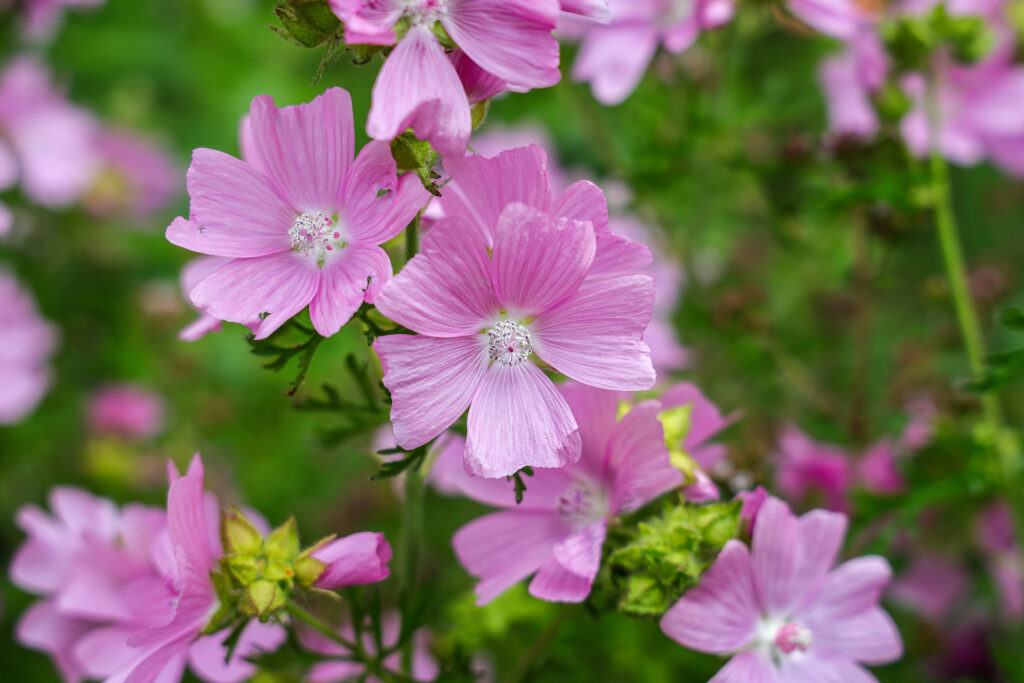
Native plants and wildflowers will be incorporated into the landscape, providing habitat and food sources for pollinators. The introduction of beehives is also under consideration, offering both environmental benefits and small-scale honey production.
These elements illustrate one of the central ideas behind regenerative systems: Stacking functions. Plants, pollinators, water systems, and food production aren’t separate features—they are interconnected components of a larger ecosystem.
Planning for Off-Grid Resilience
5th World’s planning also extends to energy and water systems.
Ellen intends for the property to operate largely off-grid over time. Solar power will likely serve as the primary energy source, supported by efficient building design when a permanent dwelling is eventually constructed.
Rainwater harvesting systems may supplement the existing well, while a planned pond could provide water storage and enhance fire resilience—an increasingly relevant concern as climate patterns shift across Canada.
Through careful design, these systems can support each other while minimizing environmental impact.
A Living Legacy
For Ellen, working with 5th World transformed what initially felt like an overwhelming project into a clear and achievable plan.
Even with permaculture training, she recognized that designing and implementing multiple, interconnected regenerative systems can require additional support.
5th World provided exactly that: A collaborative design and development partner grounded in over 20 years of experience working on properties across North America, and beyond.
The result is a roadmap for transforming ancestral land into a regenerative landscape—one that grows food, supports biodiversity, offers an attractive lifestyle as well as new revenue streams, and evolves alongside the natural systems already present.
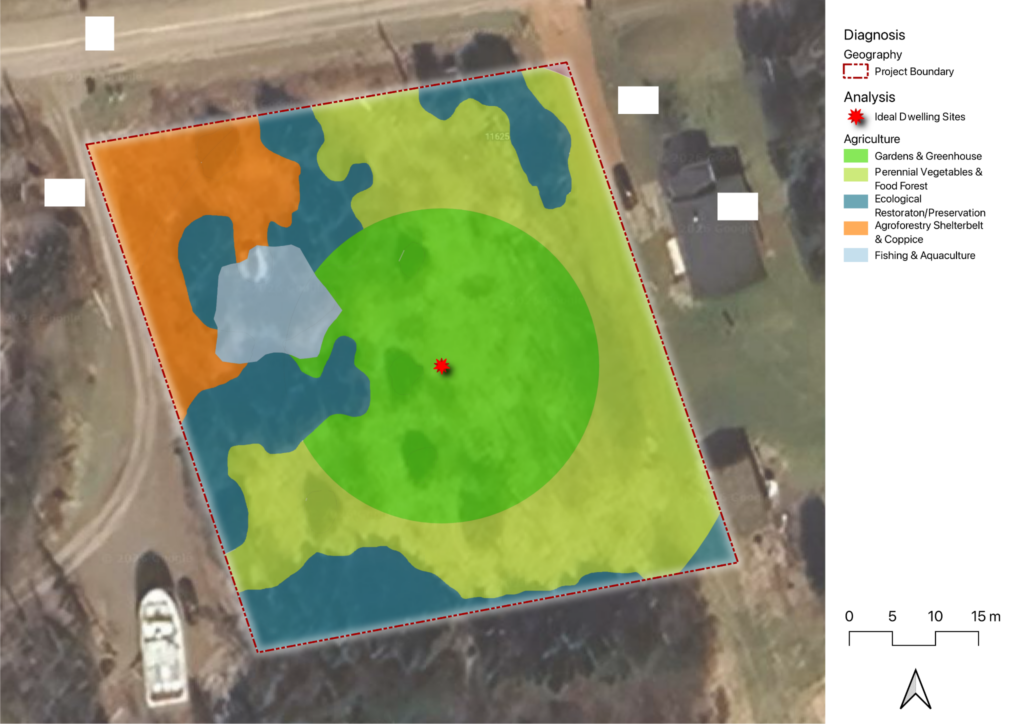
Ellen’s is an ambitious long-term project with legacy in mind. Thanks to careful planning and a strong foundation, the transformation has already begun.
And for 5th World, it represents the core of their mission: Helping landowners move from inspiration to implementation; designing landscapes where people and ecosystems thrive together.