

For many people, a greenhouse is simply a way to extend the growing season. For one architect in the United States, it became something much more ambitious: A fully integrated, self-sufficient food system that leverages the latest technology and design principles.
Working in collaboration with the team at 5th World, Maurice L. O’Connor set out to create a passive solar greenhouse that could support year-round food production, store harvests, manage temperature naturally, and operate with minimal external inputs.
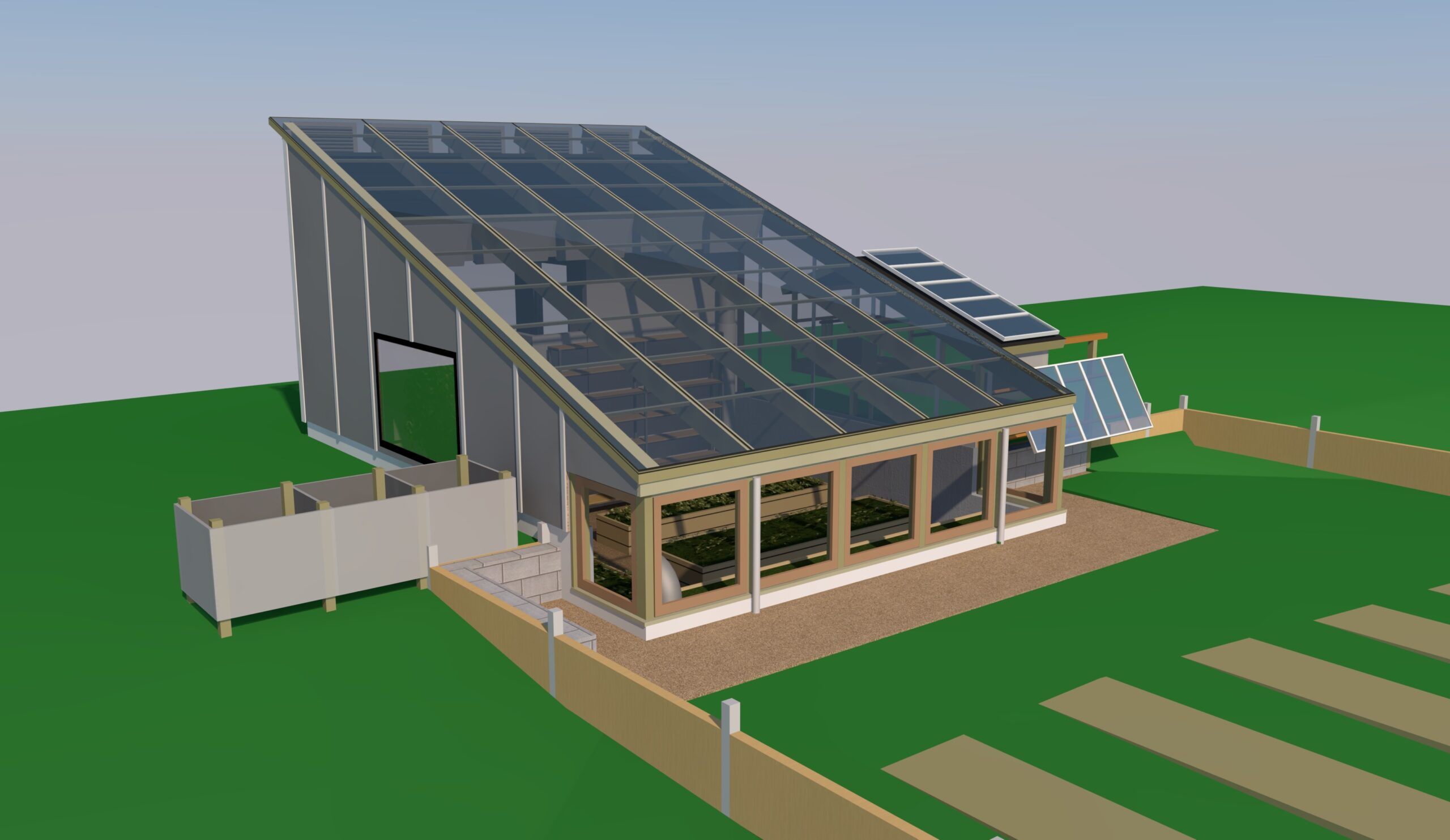
The project combines cutting-edge passive solar greenhouse design with innovative features such as a ground-air heat transfer system, basement root cellar, solar-powered infrastructure, and a solar chimney designed to provide ventilation without relying on mechanical systems.
Although construction is still underway, the design phase offers a compelling look at what becomes possible when architecture and engineering expertise come together.
The Challenge: Creating a Truly Self-Reliant Growing System
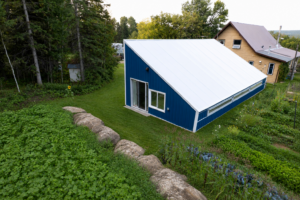
The greenhouse is being built in the backyard of a new home on family land in Massachusetts, Zone 7A, where Maurice’s wife grew up. Situated on a south-facing slope with approximately three-quarters of an acre available for cultivation, the site offers excellent sun exposure and natural topography well suited to passive solar design.
Maurice’s goals extended far beyond creating a traditional greenhouse.
He wanted a structure capable of:
- Extending the growing season without supplemental heating
- Operating completely off-grid
- Producing high-quality food year-round
- Supporting seed starting and plant propagation
- Incorporating long-term food storage
- Minimizing energy consumption
- Increasing household resilience
- Integrating elegantly into the surrounding property
Most importantly, Maurice wanted a greenhouse that worked with natural systems rather than against them.
As someone with experience in architectural design and 3D modeling, he understood the importance of getting the details right. Yet the complexity of passive solar greenhouse design—particularly when incorporating climate batteries, ventilation systems, thermal storage, and root cellaring—required specialized expertise.
That’s where 5th World came in.
Discovering 5th World
The relationship between Maurice and 5th World began years earlier through educational content.
While researching gardening on YouTube, Maurice discovered the educational work of Rob Avis, Chief Engineering Officer, 5th World. This led to him taking a permaculture design course hosted by Rob, which included a section on passive solar greenhouses.
That introduction sparked a fascination with controlled environment agriculture and the possibilities of growing food more efficiently.
Initially, Maurice began designing a much larger greenhouse project on his own. Seeking feedback, he reached out to Rob for guidance. And, what began as a consultation quickly evolved into a collaborative relationship.
As Rob reviewed Maurice’s architectural drawings and 3D models, he recognized both the quality of the work and a shared interest in innovative greenhouse design. That eventually led to Maurice contributing drafting and modeling support on several 5th World projects, including an ambitious large-scale greenhouse that integrates several lifestyle amenities such as aquaponics and a golf simulator, as well as an early prototype greenhouse design that helped shape many of the company’s current systems.
Designing Beyond the Greenhouse
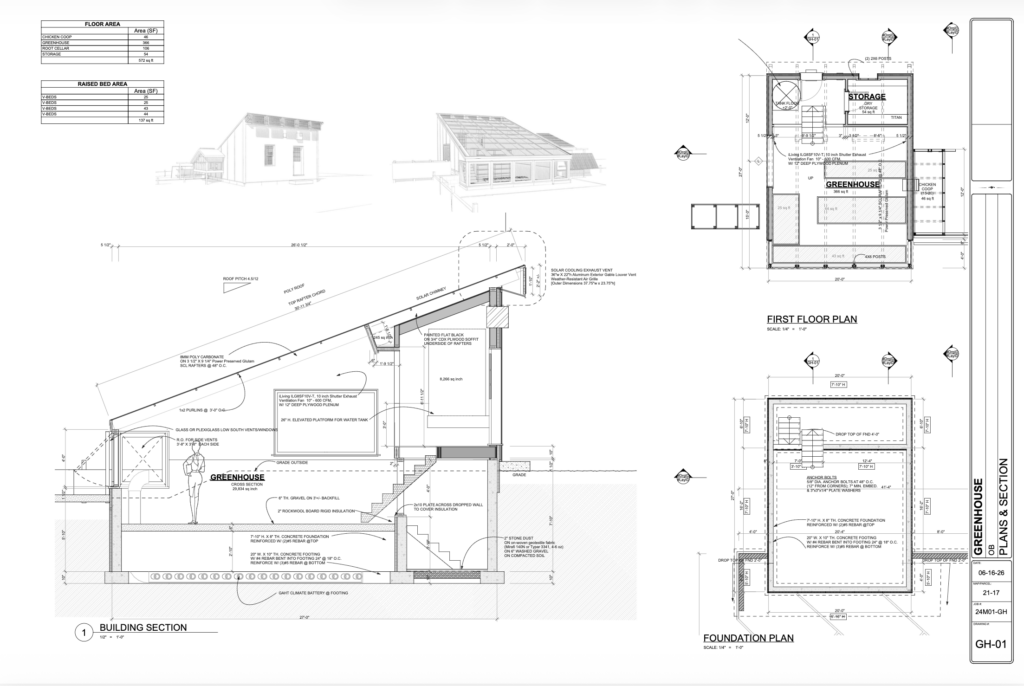
One of the most remarkable aspects of this project is that it is not merely a greenhouse—it is an integrated food-production ecosystem.
The structure includes several interconnected systems designed to work together.
Visitors will enter through a storage area located at ground level, then walk down a flight of stairs into the main greenhouse.
Beneath that space sits a dedicated root cellar designed to remain thermally connected to the earth. Unlike conventional storage rooms, the root cellar is intentionally separated from the greenhouse’s warmer growing environment through insulation and thermal design strategies intended to maintain cooler temperatures and higher humidity levels.
This allows harvested crops to move directly from production to storage without leaving the site.
Meanwhile, a 1,500-gallon water storage system connected to the main property will provide gravity-assisted water management throughout the greenhouse operation.
Solar photovoltaic panels will power the greenhouse’s electrical systems, allowing the entire facility to function independently from the utility grid.
Together, these systems create a facility capable of producing, storing, and managing food with exceptional efficiency.
Harnessing Natural Energy Flows
At the heart of the design is a sophisticated approach to thermal management.
Like many 5th World greenhouses, the project incorporates a ground-air heat transfer system, referred to as a “climate battery.” This system moves warm greenhouse air through underground piping, storing excess heat in the soil during the day and releasing it when temperatures drop.
The result is greater temperature stability, reduced risk of freezing, and improved growing conditions throughout the year.
However, this greenhouse takes the concept even further.
One of the project’s most innovative features is a solar chimney integrated into the upper section of the structure.
The concept is elegant in its simplicity.
A black-painted interior surface located beneath a section of the roof absorbs solar radiation. As air inside this cavity heats up, it rises naturally and exits through high vents. This upward movement creates negative pressure that draws cooler air into the greenhouse through lower intake vents.
The entire process occurs without consuming electricity.
Rather than relying solely on powered ventilation systems, the greenhouse uses solar energy itself to drive cooling and airflow.
That apparent contradiction is exactly what makes passive design so powerful. By understanding and harnessing natural physical processes, the greenhouse can potentially maintain comfortable growing conditions while dramatically reducing energy consumption.
Computer modeling suggests that backup fans may only need to operate during the hottest periods of the year, potentially for just a few hours during peak summer afternoons.
For the remainder of the season, passive airflow may be sufficient.
Using Modern Tools to Validate Traditional Principles
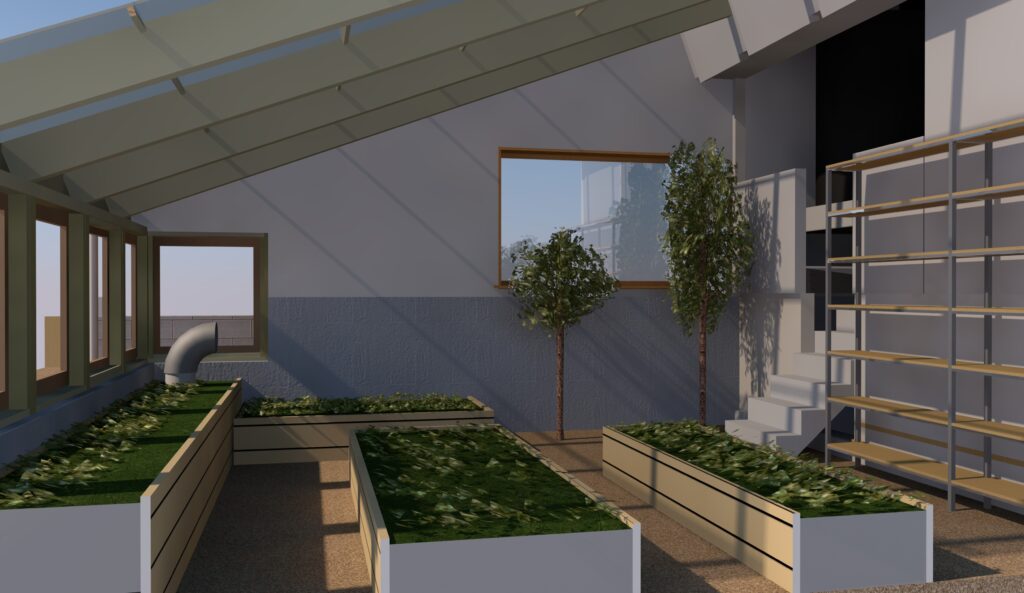
Another fascinating aspect of the project is the use of advanced modeling and simulation during the design phase.
Architectural software, heat-loss calculations, and artificial intelligence-assisted performance modeling have enabled Maurice to evaluate the greenhouse’s thermal behavior. Specifically, these tools allow designers to estimate airflow rates, calculate heat retention, model seasonal temperature swings, and test different design strategies long before materials arrive on site.
Therefore, rather than relying solely on assumptions, the team can verify whether systems are likely to perform as intended and make improvements before construction begins.
While passive solar greenhouse principles have existed for decades, modern modeling tools make it easier than ever to refine and optimize performance.
Why Food Security Matters
Like many 5th World clients, Maurice’s motivation extends beyond gardening as a hobby.
His interest in food production began after thinking more about his health, and researching nutrition and food quality more deeply. It quickly became clear to him that growing his own food on-site—fresh, nutrient-dense produce—offered a practical way to ensure a consistent, healthful diet throughout the year.
Reflecting on that journey, Maurice explained:
“I started to really enjoy gardening every year… and just how much better that food was than anything that was available otherwise.”
As his gardening experience expanded, so did his appreciation for resilience.
Rather than depending entirely on external systems, Maurice wanted greater control over an essential part of life: Food.
That perspective became a major driver behind the greenhouse project.
As he put it:
“The resilience piece is another important part for me. Having a ‘hope for the best, prepare for the worst’ mentality is something I embrace.”
This mindset increasingly resonates with homeowners facing supply-chain disruptions, climate uncertainty, rising food costs, and concerns about food quality.
A well-designed passive solar greenhouse provides more than fresh produce—it creates a measure of independence.
The Value of Collaboration
Throughout the project, Maurice repeatedly emphasized the role 5th World played in transforming ideas into a workable design.
While he brought significant architectural knowledge and design capability to the project, he credits the team’s expertise with helping him understand the complexities of greenhouse engineering.
Maurice’s experience working directly with Rob Avis proved especially influential.
In his words:
“I don’t think I would’ve been able to pull this off if I hadn’t met Rob. The way he thinks about things and solves problems showed me what’s possible and how to do it.”
He continued:
“It’s been a complete education, really.”
For 5th World, this reflects one of the company’s core goals: Helping clients understand not only what to build, but why it works.
Every greenhouse project becomes an opportunity to transfer knowledge, empower clients, and create systems that continue delivering value long after construction is complete.
Looking Ahead
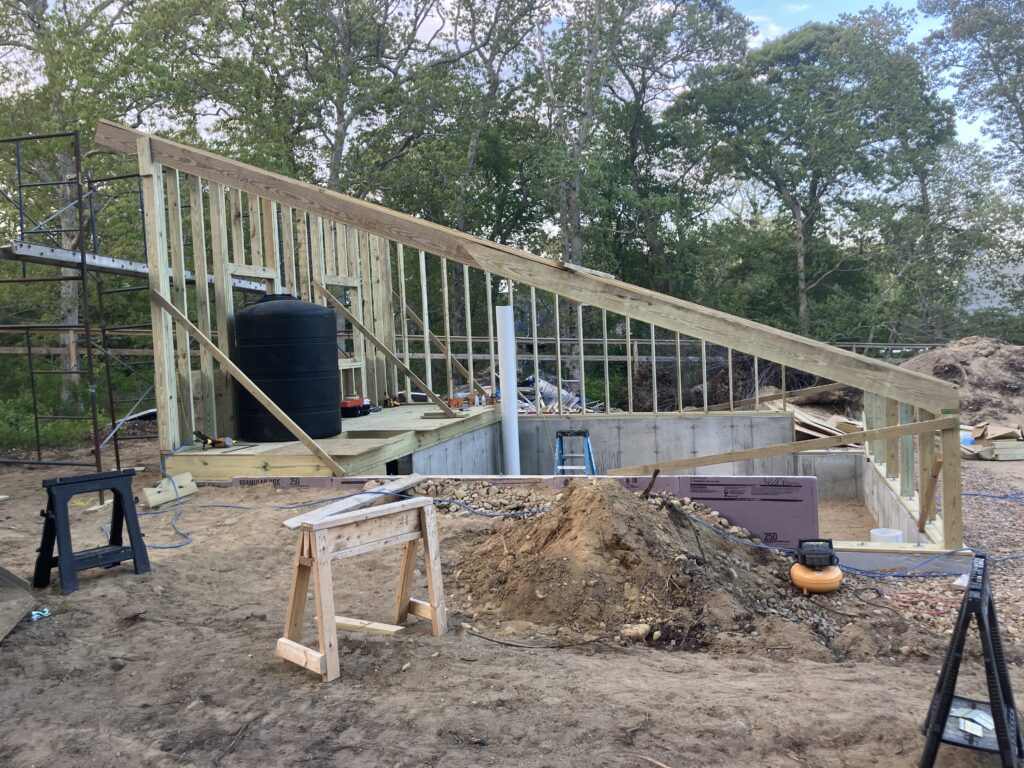
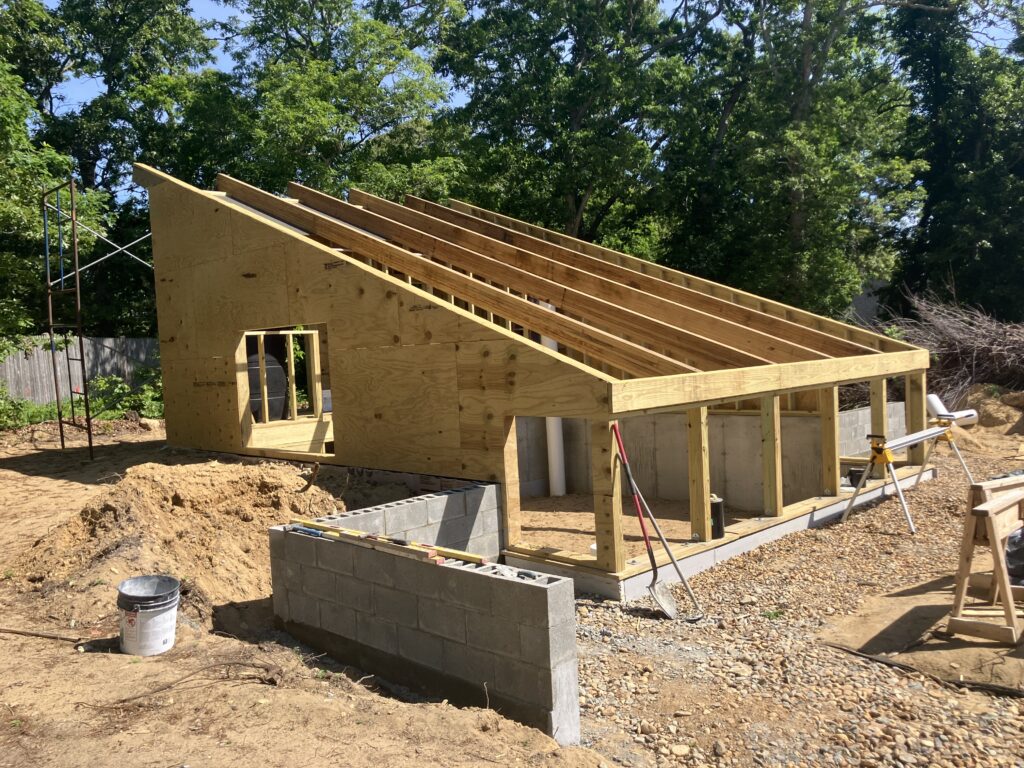
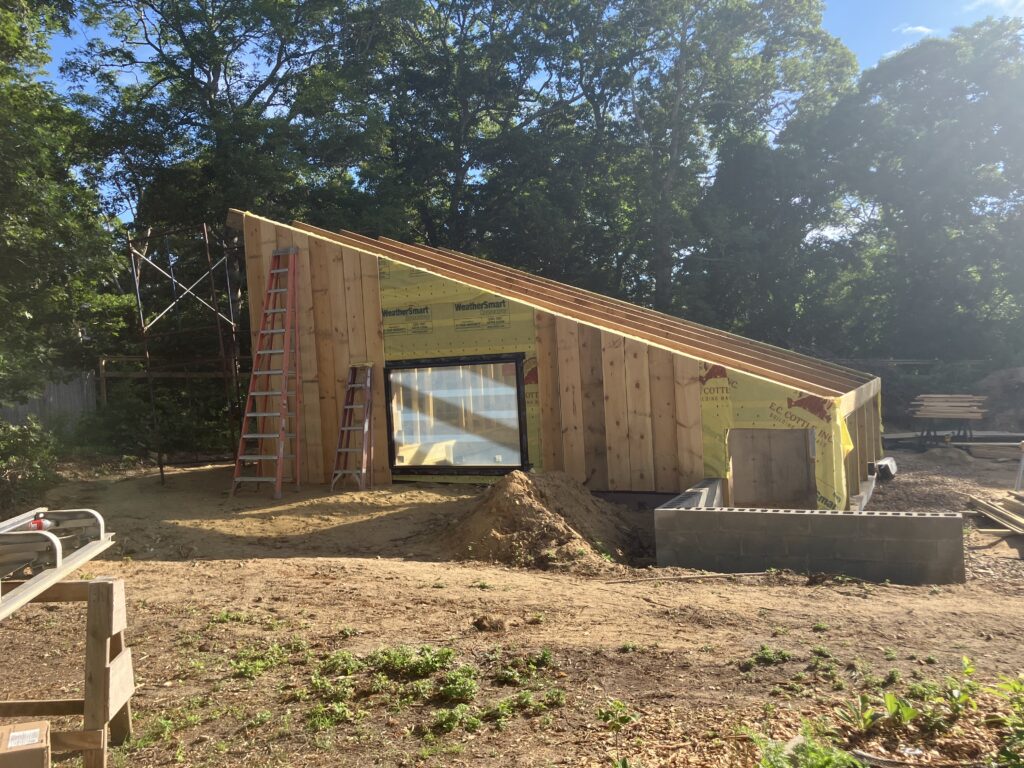
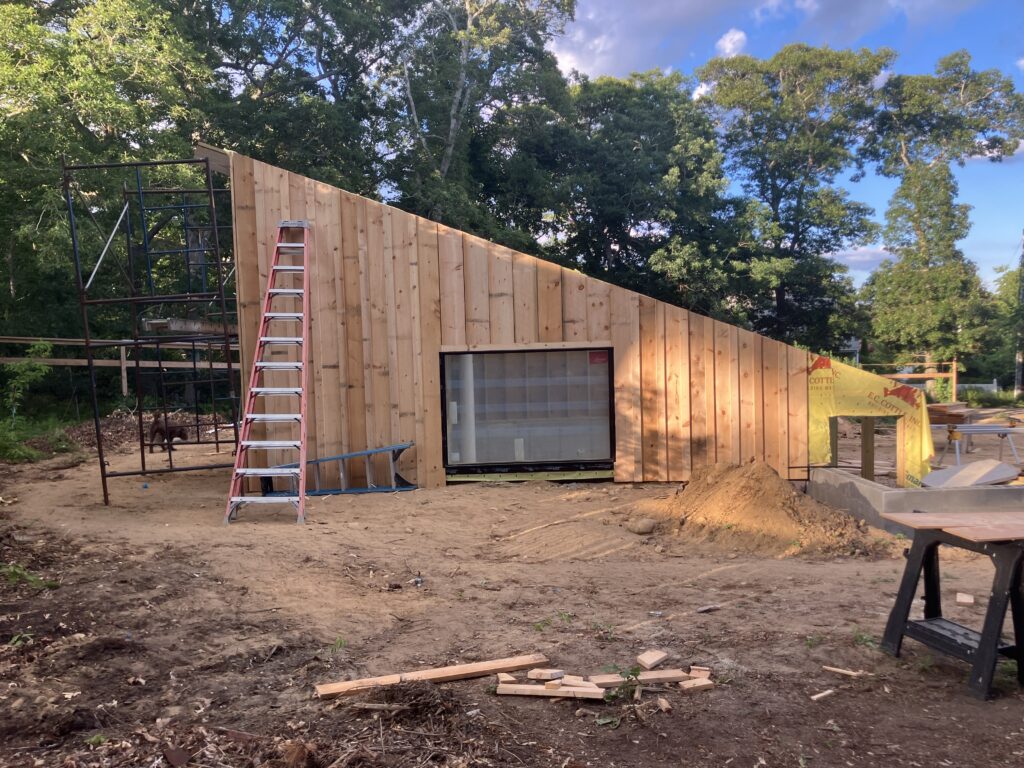
Construction of the greenhouse is still underway, making this the first chapter in a larger case study.
Once complete, the project will provide valuable real-world performance data on the interaction between climate batteries, solar chimneys, passive ventilation, root cellaring, and off-grid food production. Sensors throughout the greenhouse will track temperatures, airflow, and system performance, allowing the comparison of real-world results against the design models. Such findings may help inform future greenhouse designs and further advance passive solar growing techniques.
In the meantime, excitement is already building for Maurice, his family members, and neighbours. Plans include growing vegetables, starting seedlings, and experimenting with specialty crops.
As this project moves from concept to reality, one thing is already clear: When curiosity, ecological design, and expertise come together, extraordinary things can grow.