

When you’re considering buying land or developing a property, it’s easy to focus on what you want to build. But before you make a significant investment, there’s a fundamental question to ask:
Do you understand the land?
Just as a Home Inspection helps you understand the condition of a house before you buy or renovate it, a Land Inspection helps you understand the opportunities and constraints of the land itself.
And with winter approaching, now is the perfect time to take a closer look.
Get to Know Your Land Before Winter Sets In
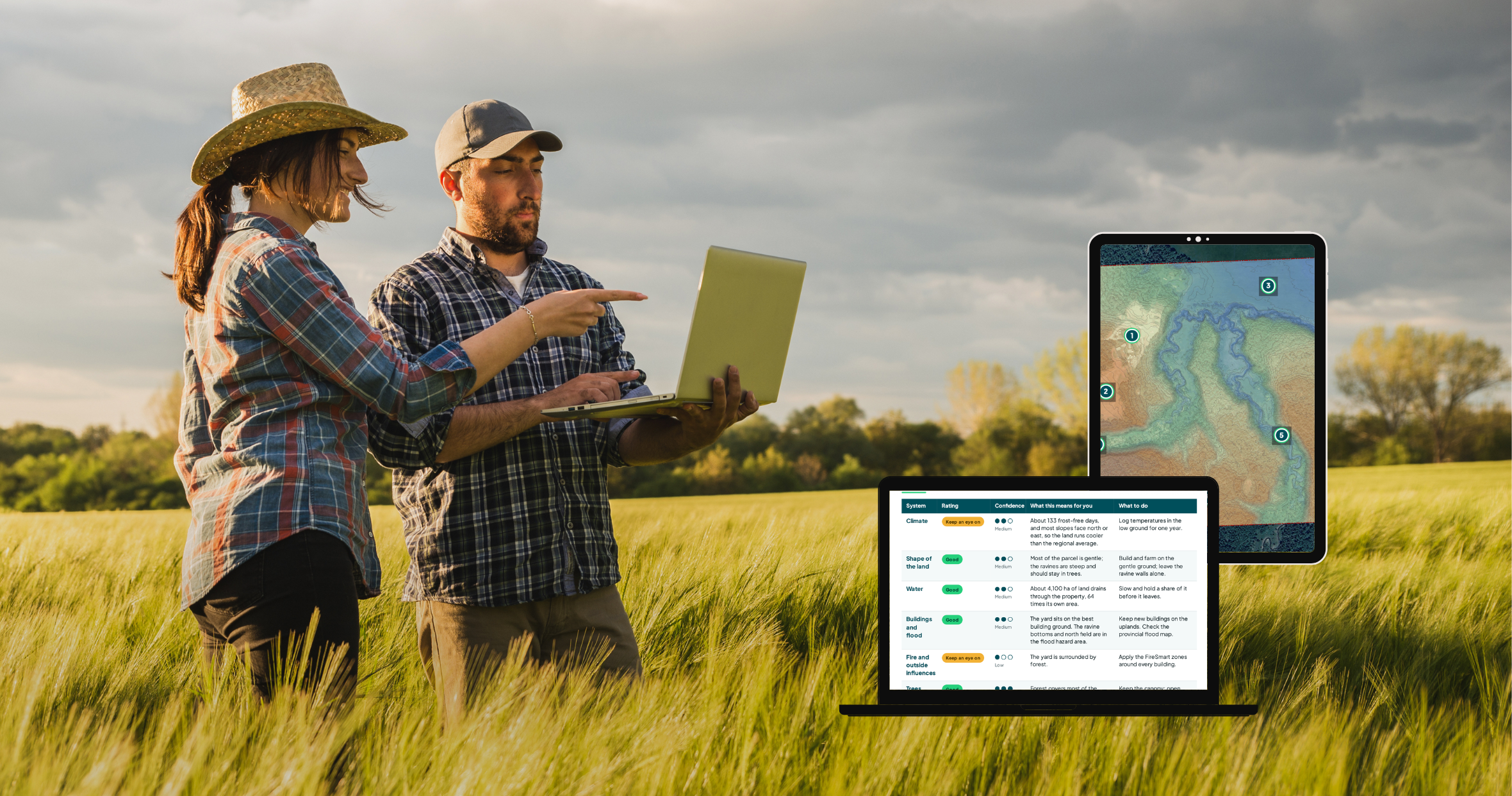
5th World’s Land Inspection service is conducted remotely using LiDAR and detailed site data, allowing us to quickly analyze the characteristics that matter when making decisions about land.
Depending on the property, our assessment may include:
- Drainage basins and influential watershed
- Elevation, slope, and aspect
- Sun and wind exposure
- Soils, agriculture types, and vegetation types and communities
- Floodplain screening
- Best building sites
The result is a clearer picture of what your land can—and can’t—support.
View an example of our Land Inspection here.
Land Inspection vs. Home Inspection

A Home Inspection looks at the systems and condition of a house. A Land Inspection applies that same proactive mindset to the entire property.
A Home Inspection typically assesses the roof, foundation, electrical, plumbing, windows, doors, and more. It can also identify issues such as corrosion, rot, leaks, dampness, mold, poor drainage, overloaded circuits, and insufficient electrical capacity. If these issues are left unchecked, homeowners may face serious hazards such as fire, structural failure, and flooding—as well as the unexpected expenses associated with addressing them.
A Land Inspection is just as important as a Home Inspection, and comes first. It applies the same preventative approach to the land and can help identify issues such as wildfire, drought, and flood risk, soil erosion, limited sun exposure, prevailing winds, difficult access, challenging terrain, and other site constraints.
But the goal of a Land Inspection isn’t simply to identify problems. It’s also to uncover opportunities.
A better understanding of the land can help identify suitable areas for buildings, roads, gardens, water systems, solar installations, and other infrastructure—before you commit to a particular plan.
Design With the Land, Not Against It
The most valuable insights from a Land Inspection often come from seeing how the different elements of a property can work together.
Instead of designing a home, driveway, garden, water system, and energy system as separate projects, you can begin with the land itself and look for ways to create a more integrated and regenerative property.
For example, understanding the topography and natural movement of water can help inform where buildings, ponds, swales, gardens, orchards, and other landscape features might be located. Solar exposure and prevailing winds can help identify opportunities for renewable energy and passive climate strategies. Soil conditions, existing vegetation, and microclimates can help determine what areas may be suitable for food production, habitat, or restoration.
This systems-level understanding can help you plan for food, water, and energy together—rather than adding each system later as an afterthought.
Enhance Wellness, Self-Sufficiency, and Resilience

With thoughtful planning, your land can help support nutrient-dense food, clean water, and renewable energy. Productive gardens, orchards, and regenerative landscapes can provide fresh food that’s packed with vitamins, minerals, fiber, protein, healthy fats, and other beneficial compounds. Well-designed water systems can capture, store, filter, and distribute water while working with the property’s natural watershed. Solar and other renewable energy systems can help produce energy locally.
These systems also make a property more self-sufficient by depending less on distant food, water, and energy systems and producing more of what it needs close to home. Additionally, they enhance its resilience to extreme weather such as wildfires, droughts, and floods by, for example, locking moisture into the soil, providing onsite water storage, and improving drainage patterns.
This doesn’t mean a property will be completely independent or immune to risk. Rather, it means making deliberate design choices that give you more local resources, more options, and greater capacity to adapt.
And the foundation for those decisions is understanding the land.
Start With the Land
A Land Inspection can be purchased as a standalone service or as the first step in a larger project. Whether you’re exploring a potential purchase, planning a homestead or farm, considering new infrastructure, or looking for ways to improve an existing property, it’s a practical first step toward understanding what you’re working with.
5th World’s Land Inspection starts at $89.
Buy your Land Inspection now and get a clearer understanding of your land before making your next big decision.
Have questions about our Land Inspection service? Contact us.