WILLIAMS LAKE, B.C., 27 October, 2026 — The University of British Columbia (UBC), through its Alex Fraser Research Forest Station (AFRF), is advancing the Community Bioenergy and Food Sovereignty Demonstration Hub in Williams Lake, British Columbia. The initiative will integrate community-scale biomass energy, year-round food production, applied research, and experiential learning. UBC is collaborating with 5th World, a regenerative agriculture and land stewardship organization, to explore opportunities for integrating regenerative food production into the research and demonstration facility.
The project will explore a question with growing relevance for rural, northern, and remote communities: Can locally available biomass resources be used to produce renewable energy, grow food year-round, and strengthen local food sovereignty?
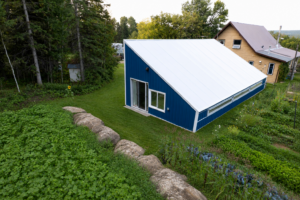
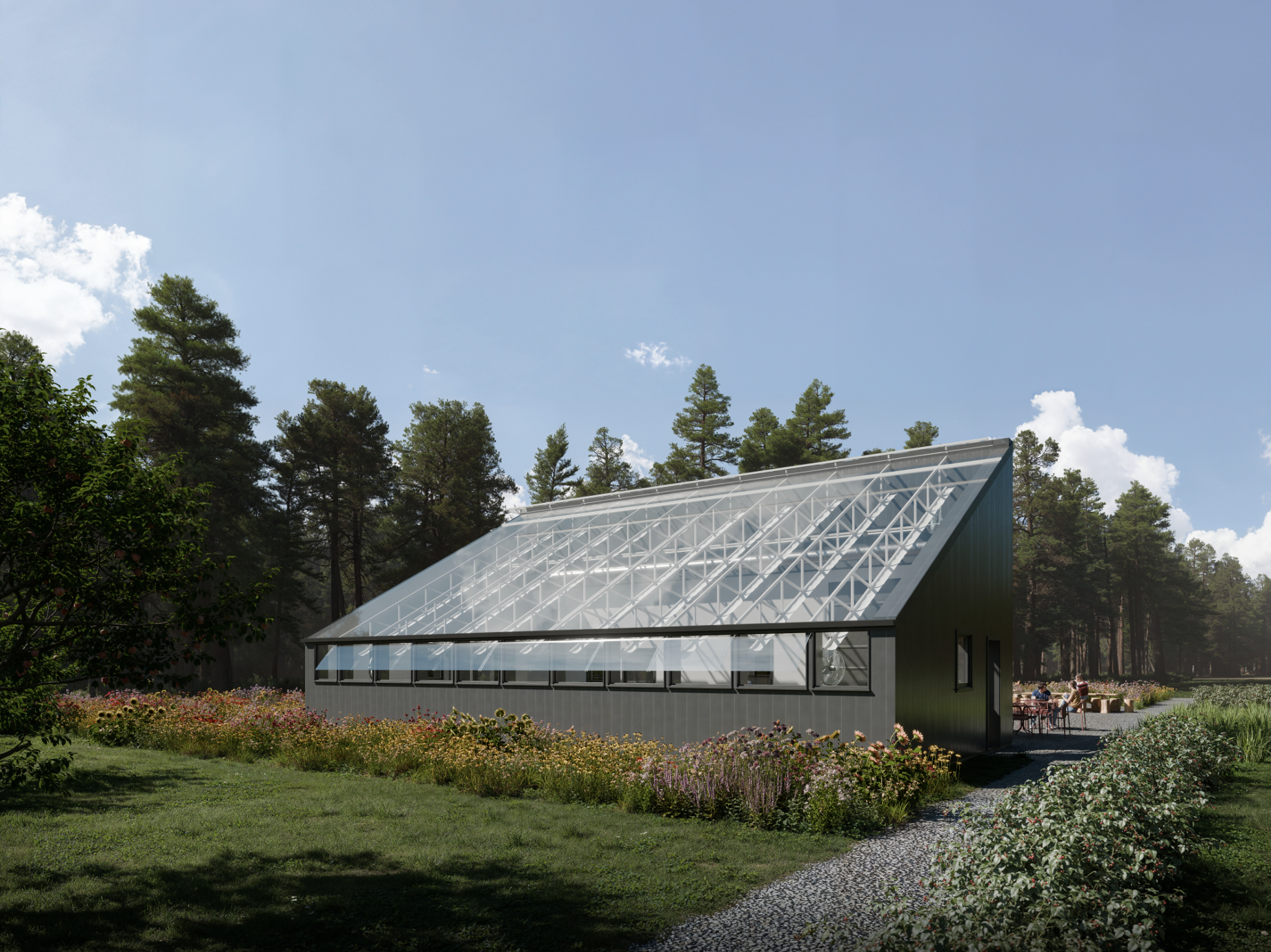
At the centre of the 44-acre demonstration site is an existing combined heat and power (CHP) biomass system that converts locally available waste wood into energy. Across Canada, forest residues left after logging and wildfires represent a potential source of renewable energy. This could be particularly valuable for remote communities seeking to reduce reliance on diesel generation, lower greenhouse gas emissions, and strengthen energy security. This project provides a practical example of how a single biomass energy system can deliver multiple community benefits, including supporting food production and heating a highly efficient passive-solar greenhouse through the cold Interior B.C. winter.
The greenhouse is planned to be integrated with a regenerative farm operated by 5th World as part of its contribution to the collaboration. Regenerative agriculture focuses on improving soil health, enhancing biodiversity, and supporting long-term ecosystem productivity. The proposed passive solar greenhouse (PSGH) will integrate thermal energy from UBC’s biomass CHP system with an earth-tube system designed to help regulate greenhouse temperatures and improve energy efficiency. This integration will provide opportunities for UBC research on renewable energy, greenhouse performance, and sustainable food production. Over time, the farm is expected to incorporate annual and perennial crops, fruit trees, and potentially livestock, aiming to support local food production and demonstrate the potential of regenerative agriculture for rural, remote and Indigenous communities throughout Canada.
From Regenerative Design to a Working Farm
The Alex Fraser Research Forest Station, run by UBC’s Faculty of Forestry & Environmental Stewardship, will oversee the development of the Community Bioenergy and Food Sovereignty Hub as a research, education, and demonstration facility. Building on its existing biomass CHP infrastructure, the initiative aims to integrate renewable energy production with regenerative agriculture while creating opportunities for applied research, training, and community engagement. Dr. Dominik Roeser, Associate Dean of Research Forests & Community Outreach at the Faculty of Forestry & Environmental Stewardship, UBC, said: “The Community Bioenergy and Food Sovereignty Hub builds on UBC’s ongoing work at the Alex Fraser Research Forest to explore practical applications of community-scale renewable energy. By connecting biomass energy with greenhouse food production, we aim to create new opportunities for applied research, experiential learning, and community-based training. Our collaboration with 5th World will bring additional expertise in regenerative agriculture and help us explore how these integrated systems could contribute to more resilient local food systems.”
As part of its contribution to the collaboration, 5th World will lead the design and operation of the regenerative farm, turning the site’s infrastructure into a functioning agricultural enterprise. Food production is expected to expand over several years as soils improve, perennial crops mature, infrastructure is established, and regional markets develop. A dedicated Farm Manager will oversee day-to-day operations and work with the 5th World and UBC teams as the farm develops.
Food produced onsite is expected to be sold into regional markets, providing an opportunity to demonstrate both the agricultural potential of Interior B.C. and the economic conditions needed to support a viable local food system. UBC Food Services has expressed interest in supporting the initiative, creating potential opportunities for food grown at the demonstration farm to reach UBC campuses and events while connecting production with education and public engagement.
Marc Ziade, Chief Executive Officer, 5th World, said: “This collaboration offers a distinctive opportunity to demonstrate how food sovereignty and regeneration are fundamentally inseparable. Regenerative food systems advance sovereignty by reducing reliance on external inputs and supply chains. In turn, food sovereignty can only be sustained when food systems regenerate the soils, biodiversity, and broader ecosystems upon which their long-term productivity depends.”
A Living Laboratory to Demonstrate a Replicable Model
The Community Bioenergy and Food Sovereignty Hub is being developed primarily as a UBC research, education, and demonstration facility, integrating biomass energy with greenhouse food production and regenerative agricultural practices. Through collaboration with 5th World, the Hub will provide opportunities for UBC researchers, students, industry partners, and communities to investigate the practical connections between sustainable forestry, renewable energy, agriculture, and local food systems in a real-world setting.
The project will also explore the potential to develop a model that can be adapted elsewhere. Northern communities, researchers, and students will have opportunities to learn from the system as it operates, from energy requirements and crop performance to farm economics, operations, and market development.
The project’s circular, local approach is particularly relevant for communities where food travels long distances to reach consumers, growing seasons are short, and energy costs can be significant. At the same time, many of these communities have access to forestry residues and other forms of biomass that could play a greater role in local energy systems. Therefore, the lessons could be particularly valuable for rural, northern, and Indigenous communities seeking to strengthen local food systems while making better use of resources already available in their regions.
Rather than proposing a one-size-fits-all solution, the demonstration hub is intended to provide a working example that communities can learn from and adapt to their own needs.
Ultimately, this project explores a simple but increasingly important idea: the resources needed to create better food systems may already exist within our communities. The opportunity is to connect them.
About the University of British Columbia
The University of British Columbia is a global centre for teaching, learning and research, consistently ranked among the top public universities in the world. UBC embraces innovation and transforms ideas into action. Since 1915, UBC has been opening doors of opportunity for people with the curiosity, drive and vision to shape a better world.
About the Alex Fraser Research Forest
The Alex Fraser Research Forest (AFRF) is part of the University of British Columbia’s Faculty of Forestry & Environmental Stewardship and provides opportunities for research, education, and demonstration related to sustainable forest management and the stewardship of forested landscapes in British Columbia’s Interior. AFRF encompasses approximately 10,000 hectares across two separate forest blocks in the Cariboo region, supported by a central field station that serves as its administrative and operational hub for research, education, and forest management activities.
About 5th World
5th World is a regenerative design and land stewardship company focused on building climate-resilient farms and estates. 5th World works at the intersection of regenerative agriculture, food sovereignty, ecological restoration, and resilient infrastructure—designing and operating properties that integrate diverse crops, animals, water systems, energy, and strong local market connections.
Media Contacts
5th World
Christine Lariviere
Senior Marketing Manager
christine.lariviere@5thworld.com
University of British Columbia
Faculty of Forestry and Environmental Stewardship
Charlotte Fisher
Marketing and Media Relations Strategist
charlotte.fisher@ubc.ca
Title Image
Passive solar greenhouse render by GREATERTHAN VIS.