


The conversation around regenerative agriculture is changing.
For years, regeneration has largely been framed through the language of sustainability, environmental stewardship, and climate mitigation. While those outcomes remain important, a different narrative is rapidly emerging—one rooted in competitiveness, resilience, productivity, and long-term value creation.
At the recent Regenerative Food Systems Investment Canada conference, a consistent theme emerged across producers, investors, policymakers, and food system innovators: Regenerative agriculture is no longer simply an environmental strategy. It is increasingly being viewed as a business and economic development strategy.
The challenges facing agriculture today are not isolated farm-level problems. They are systems-level problems. Climate volatility, declining productivity, aging farmer demographics, infrastructure gaps, fragmented supply chains, and underinvestment in natural capital are converging into a broader question:
How do we build agricultural systems capable of thriving in an increasingly uncertain world?
The answer appears to be regeneration.
From Sustainability to Competitiveness
One of the most notable features of the conference was the language being used to describe regenerative agriculture.
Rather than focusing primarily on emissions reductions or sustainability goals, speakers repeatedly emphasized regeneration as:
- A resilience strategy
- A productivity strategy
- A risk management strategy
- A return-on-capital strategy
This reframing matters.
Agricultural productivity growth is slowing globally and is on pace for some of the weakest growth rates seen since the 1970s. At the same time, climate-related disruptions are no longer theoretical future risks. They are already impacting farm balance sheets through drought, flooding, extreme weather events, and volatile production outcomes.
Investors are paying attention.
Capital increasingly seeks systems that are durable, adaptive, and capable of generating stable returns over long time horizons.
Conventional agriculture is made up of fragile systems dependent on escalating synthetic inputs, degrading soil health, and increasingly volatile weather patterns. It is therefore becoming harder to finance.
By contrast, regenerative agriculture—whose healthy soils improve water retention, diverse production systems reduce operational risk, improved ecosystem function stabilizes yields, and better land stewardship protects long-term asset value—is becoming a clear economic advantage.
Viewed through this lens, regenerative agriculture becomes less about environmental virtue and more about economic resilience.
Agriculture’s Biggest Challenge May Be Coordination
A recurring insight throughout the conference was that regenerative agriculture is fundamentally a coordination challenge.
Many discussions about agriculture focus on practices at the farm level. Cover crops. Rotational grazing. Reduced tillage. Agroforestry.
These practices matter.
However, the transition to regeneration ultimately requires much more than practice adoption.
It requires alignment across an entire system:
- Producers
- Capital providers
- Processors
- Distributors
- Policymakers
- Consumers
Regeneration succeeds when incentives are aligned throughout the value chain.
This is why speakers repeatedly emphasized systems thinking.
Regenerative agriculture is simultaneously:
- A capital allocation challenge
- A systems design challenge
- A coordination challenge
- A risk management challenge
Unfortunately, systems thinking is often difficult to communicate because it requires looking beyond individual transactions and understanding how interconnected parts influence one another.
A farm can produce regeneratively, but if there is no processor capable of handling its products, no distributor capable of moving them efficiently, and no market willing to recognize their value, adoption stalls.
The challenge is not simply changing farms.
The challenge is redesigning systems.
The Missing Middle: Infrastructure
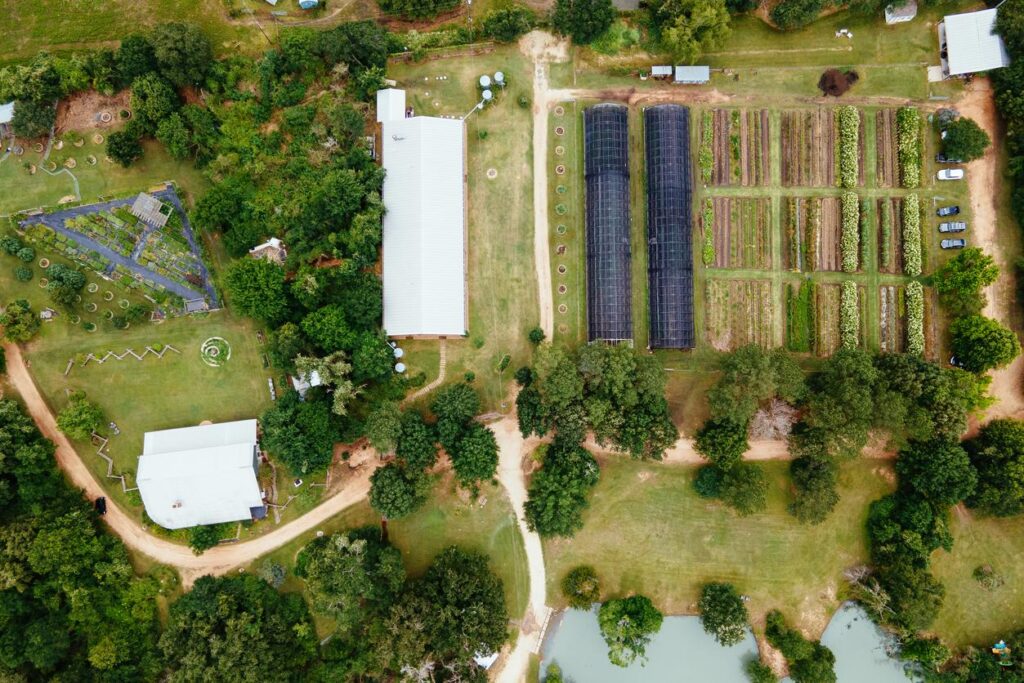
Perhaps the most consistent practical theme throughout the conference was the need for food system infrastructure.
Across regions, participants identified similar bottlenecks:
- Lack of cold storage
- Insufficient freezer capacity
- Limited processing facilities
- Limited abattoir capacity
- Weak aggregation systems
- Inadequate regional distribution networks
Again and again, participants returned to a simple idea: Every town should have local food infrastructure.
While regenerative agriculture receives considerable attention, infrastructure often receives far less. Yet infrastructure may represent one of the highest-leverage opportunities in the entire food system.
Without processing facilities, producers cannot scale.
Without aggregation systems, regional markets remain fragmented.
Without distribution infrastructure, local food struggles to compete with highly integrated industrial supply chains.
The future of regenerative agriculture may depend as much on warehouses, processing facilities, and logistics systems as it does on cover crops and grazing plans.
If regeneration is to move beyond niche markets, investment must flow not only to farms but across the entire value chain.
Building Financial Shock Absorbers
Farm profitability emerged as another central topic.
Producers repeatedly highlighted a difficult reality: Commodity farming alone is increasingly challenging.
Margin compression, input volatility, weather risk, and market fluctuations create significant financial pressure.
As a result, many regenerative producers are pursuing diversified revenue models.
Examples discussed included:
- Agritourism
- Educational events
- Commercial kitchens
- Equipment rentals
- Value-added food products
- Direct-to-consumer sales
The underlying principle is straightforward.
Resilient systems require resilient cash flow.
Diversification can be thought of as creating “shock absorbers” for the business.
This concept deserves wider attention.
Regeneration is often discussed in ecological terms, but financial resilience is equally important. Farms need ecological diversity and economic diversity.
Both create resilience.
The Strategic Advantage of Vertical Integration
Several conference examples demonstrated how value capture increases when producers move beyond primary production.
One cited example was Harvest to Gather, which operates approximately 15,000 acres while also owning processing, distribution, and retail assets.
This model highlights an important reality:
The greatest leverage in food systems often exists beyond the farm gate.
Historically, much of agriculture’s value creation has migrated toward processing, branding, logistics, and retail.
Vertical integration allows producers to participate in those higher-value portions of the chain.
It also improves resilience.
Control over processing capacity reduces bottlenecks.
Ownership of distribution networks improves market access.
Direct relationships with consumers create stronger feedback loops and more predictable demand.
Not every farm can vertically integrate. However, the broader lesson remains relevant: Regenerative agriculture must think beyond production and toward value chain design.
Nature Capital Is Becoming Investment Capital

One of the most forward-looking discussions at the conference centered on natural capital and nature risk.
For decades, markets have largely ignored ecosystem services despite their immense economic value:
- Pollination
- Water filtration
- Carbon storage
- Flood mitigation
- Soil formation
- Biodiversity
These services underpin economic activity yet rarely appear on balance sheets.
Conference participants highlighted estimates suggesting Canada’s ecosystem services contribute approximately $3.6 trillion in value, much of which remains economically invisible.
That invisibility is beginning to change.
Investors are increasingly examining:
- Ecosystem service valuation
- Nature-risk assessment
- Watershed protection
- Biodiversity impacts
- Soil health indicators
The concept of “Green Swan” risk—systemic financial and economic risks caused by climate change that are highly probable, impactful, and potentially irreversible—popularized through financial system discussions, also emerged repeatedly. Unlike traditional financial risks, Green Swan risks involve systemic ecological disruptions capable of triggering cascading economic consequences.
This shift has significant implications.
Conventionally managed farms may increasingly face stranded asset risks if ecological degradation undermines future productivity.
Conversely, regenerative systems may become increasingly attractive because they build natural capital rather than consume it.
An especially notable insight was the repeated recommendation to “talk nature, not climate.”
Participants observed that nature-based framing tends to be less polarizing, more tangible, and more economically relatable.
People may disagree about climate policy.
They rarely disagree about healthy soil, clean water, productive farmland, or thriving ecosystems.
The Financing Gap
Despite growing enthusiasm for regenerative agriculture, one challenge remains persistent: Financing the transition.
Nature operates on long timelines.
Financial markets often do not.
This mismatch creates one of the largest barriers to adoption.
Regenerative outcomes frequently take years to materialize.
Traditional investment horizons, lending structures, and insurance models are often not designed for these timelines.
As a result, catalytic capital—investment that is intentionally deployed to attract, unlock, or enable additional private or commercial investment that would not otherwise occur—is increasingly viewed as essential.
While transition capital—financing that supports the shift of high-emitting, resource-intensive, or unsustainable activities toward lower-carbon, more sustainable, or climate-aligned practices and technologies—helps absorb risk during the period between investment and realized outcomes.
Several initiatives discussed at the conference reflect growing recognition of this challenge. These include: Farm Credit Canada (FCC) programs, advisory support, technology tools, and succession financing efforts.
However, much more innovation is needed.
Future opportunities may include:
- Resilience-based lending
- Performance-based insurance
- Ecosystem service financing
- Blended finance structures
- Outcome-based investment models
If regenerative agriculture is to scale, capital systems must evolve alongside production systems.
The Coming Succession Challenge

Perhaps the most significant long-term issue discussed was farmer succession.
More than 40% of the current agriculture domestic workforce is projected to retire by 2033.
This represents one of the largest ownership transitions in agricultural history.
The implications are profound.
Who will take over these farms? How will younger producers access increasingly expensive land? How will transitions be financed? And, how can ecological stewardship be maintained across generations?
Emerging solutions discussed included:
- Shared equity structures
- Co-ownership models
- Conservation partnerships
- Innovative land-access programs
The future of regeneration may depend less on convincing existing producers and more on enabling the next generation of land stewards.
Succession is not simply a demographic issue.
It is a systems design challenge.
Regeneration Moves at the Speed of Trust
While the conference covered finance, infrastructure, policy, technology, and investment, one theme consistently resurfaced beneath all others.
Trust.
Regeneration is fundamentally relational: It depends on trust between farmers and lenders; between producers and consumers; between communities and ecosystems; between current and future generations.
One phrase captured this reality particularly well: “Regeneration moves at the speed of trust.”
This observation highlights a tension within modern economic systems.
Many institutions are designed to optimize efficiency, scale, and short-term returns. Regeneration, by contrast, requires patience, stewardship, collaboration, and long-term thinking.
The future of regenerative agriculture therefore depends on more than new technologies or new financial products.
It depends on building systems capable of rewarding long-term value creation.
The Opportunity Ahead
The most important takeaway from the conference was that regeneration is no longer a niche agricultural movement.
It is emerging as a framework for economic resilience.
The farms, businesses, investors, and communities that thrive over the coming decades will likely be those capable of managing complexity, strengthening natural capital, diversifying risk, and building adaptive regional systems.
The opportunity extends far beyond agriculture.
It includes redesigning the infrastructure, capital flows, relationships, and institutions that support food production.
Therefore, regeneration is not simply about growing food differently: It is about organizing systems differently.
The question is no longer whether regeneration is environmentally beneficial. It is whether our agricultural and economic systems can remain competitive, productive, and resilient without it.
Increasingly, the answer appears to be no.